

Professionalizing academic roles and work
Executive brief
- Given expanding demand, relevance apprehension, and discombobulated systems, Australia should produce Education Universities which deliver experiences and outcomes which are good for the country and for students.
- Education Universities need academic teachers who are professional, have autonomy, and have attractive and sustainable work.
- Education Universities would deliver brilliant education which integrates assessment, teaching, curriculum and support into authentic experiences pitched right where students are ready to thrive.
University education lays conduits for healthy and prosperous lives. Yet in styling themselves up in recent decades universities have fired-up problems around education. By 2030, will university education be any more than ‘content’ and ‘delivery’, ‘operations’ and ‘marking’?
The world needs Education Universities like never before. Now is the time to weave important aspects of education back into the university equation, to design Education Universities so that they are ready to educate.
Education Universities need new professional academic teachers. Academic work in many countries, Australia included, is caught in a web of turmoil not of its own making. The role and career of an academic teacher must have the status of a profession. This professional work must be meaningful, embrace autonomy, and be sustainable.
Learning infrastructure needs to ‘sweat’ for learners enrolled in an Education University. An Education University would only teach curriculum students need to know. Transforming curriculum lies at the heart of Education Universities. As the growth of contemporary artificial intelligence has revealed, the best higher education involves real people learning together in real places. Deploying needed, lively and authentic curriculum will only work if people engage.
Clearly, Education Universities will sit in matured education systems. They will give rise to novel education economies. This is more than an important spillover – it is critical market transformation.
Time to design Education Universities. Today’s universities evolved from different contexts and activities, and often by accident or random circumstance.
Hamish Coates and Gwilym Croucher
Wielding colorful chalk
Universities are filled with brilliant, creative, competitive people, and are astonishingly wonderful at many things. Indeed, it is universities, through research, innovation, commercialization, and outreach, which often invent the ways and means that others use. Overwhelmingly, however, countries, parents, professionals and corporations crave university education. It is university education that lays conduits for healthy and prosperous lives.
Yet in styling-up services, universities have fired-up problems around education. By 2030, will university education be any more than ‘content’ and ‘delivery’, ‘operations’ and ‘marking’? Will the sum of its many parts be far less than any hopefully still imaginable whole? Education around the world has been shaken and ‘re-engineered’ by coders, consultants, lawyers, agents, builders, rankers and bankers. Intangible but core elements have fallen from the mix. Yet it is these intangibles which make it attractive to teach and learn in formal higher education. In the rush to meet demand, academic leaders appear to have dropped, broken, or forgotten the chalk.
Now is the time for colorful chalk. The world needs Education Universities like never before. Now is the time to weave important aspects of education back into the university equation, to design Education Universities so that they are ready to educate.
There is evident need for Education Universities. To frame the analysis which follows we list a few, and certainly not all reasons why these institutions would be great for the nation and for students. As foreseen at the very outset of the ‘world-class universities’ era, pre-occupation with ‘research’ in status-hungry institutions has subordinated education, leading to precarious and unattractive arrangements for teachers, uncertainties about the quality of education, and doubts about standards and outcomes. Current institutional arrangements, little more than a few decades old, are evidently fragile, fraught, and in need of more substantive existential re-thinking than episodic commercial or political reaction enables. Few with expertise think current arrangements are viable. Nor are they inevitable or immutable. Demand for university education, not just among school-leavers but across the lifespan, has burst any assumption that the same individual experts are required or capable of both. Evidence from other countries, from other sectors, and from prevailing Australian arrangements, shows that education-dedicated institutions deliver excellent experiences and outcomes. Sub-sectoral (vet/higher education) institutional boundary crossing in recent decades has done little to address concerns from earlier eras, and has yet to pave a harmonious path ahead.
An Education University is a brilliant institution full of teachers, students, and education. It differs to existing universities due to its preoccupation with education, and because it does not have a comprehensive research program. While maybe trivial, this clarification is important because in Australia ‘research’ has become entwined with the idea of a university. This was baked in during the time when sector architects inhaled the myth of an essential and inviable ‘teaching and research nexus.’ Now, the myth is subdued, mostly forgotten, and only emerging occasionally in marketing campaigns. Even then, however, staunch caveats are exercised, as nowadays it is not widespread practice for top researchers to do much teaching. Education Universities are neither better or worse than ‘comprehensive’ or ‘research-focused’ universities, just different. Research outputs do not figure in their KPIs. Research careers are not central to their pathways. Learning outcomes and teaching careers heat the core of an Education University. Excellent profession-capable graduates shape the agenda.
An Education University is different to many of the existing tertiary-focused institutions that are not currently titled ‘university’ and which concentrate on education. These take a range of forms, for instance ‘online service firms’, ‘shopfronts campuses’, ‘non-university providers’, and an assortment of other institutions not registered to do ‘research’. Many of these institutions are educationally innovative, but they are not, and do not claim to be, Education Universities. They may shelter under the regulatory wing of a mother university, plug-in services, teach students in non-credentialled courses, or work across sub-sectoral boundaries.
As the above remarks reveal, Australia presents a superb setting to provoke these adventurous and significant ideas. As with many wealthy countries, the Australian government seeks ‘universal’ participation in higher education, yet current universities were not designed to meet such demand. They are already stretching, if not bursting. Australia is hollow when it comes to Education Universities. Australia dismantled the closest things it ever had decades ago and has laws in place to block redevelopment. Governments turn a blind regulatory eye and cold policy shoulder to the often quite excellent organizations which have morphed to fill the void. Australia has long been a creative place for education innovation, and has evolved systemic features which resonate around the world. Yet the country is challenged by periodic crisis and uncertainty which call system settings into question. It is a helpful time to stand back and thrash out the rudiments of a sustainable Education University.
Hence in this analysis we venture a deliberate, forthright and positive image of a university with education at its core. We provoke ideas around academic roles and work to sketch rudiments.
Defining professional academic teaching roles
Education Universities need new professional academic teachers. Academic work in many countries, Australia included, is caught in a web of turmoil not of its own making. Traditional teaching and research academic roles are expensive and not always appropriate. Assuming traditional roles are gold standard has lowered the status of education, led to widescale outsourcing, and left unanswered major questions about quality.
While widespread, teaching roles are usually lowly and ill-defined in today’s version of a public university. Institutionally, ‘teaching-focused roles’ are often seen as subordinate portions or carve-outs of full research professorships. Contemporary Australian workplace agreements provide skeletal legal clarification for ‘teaching focused roles’ but these roles are negotiated within cramped, institutionalized perspectives. They do not articulate an academic teaching role that is meaningful, career-defining, and ambitious, with a clear promotion pathway from lecturer to professor. There are job and institutional descriptions, but these fall far short of coherent clarification about profession, career prospects, and roles. Traditionally, universities have relied on convention and culture to plug gaps in work expectations.
Indeed, despite much research, support, advocacy and experience, professional academic teaching roles remain remarkably undefined. Dynamism is absent, not least because teaching roles are perpetually precarious. To thrive, higher education needs a better explanation which, importantly, attracts and engages great talents in professional academic teaching. In summary, work must be done to clarify university teacher roles so they can be enacted in fit for purpose ways, and give shape to meaningful careers.
To open new opportunities, this building work is best done with a degree of distance from current legal and regulatory circumstances relating to workforce and higher education regulation. Indeed, it can be done in counterpoint to prevailing and invariably contingent arrangements, with reference to other professions, and through consideration of career-distinctive attributes. This area is well-imagined and articulated, and obviously plays out in different disciplines in varying ways.
Essentially, the role and career of an academic teacher must have the status of a profession. Curiously, the academic teaching profession, which undergirds all other professions, has never itself achieved professional status in Australia’s universities. This means we must build a profession by specifying core characteristics and limits (Figure 1). Important characteristics, which must arise through reformed doctoral training, education internships, or supplementary training, include:
- Knowledge, which defines the field and give rise to procedures and skills;
- Culture, which underpins an overarching professional perspective, which is enduring, and which transcends organizations and roles;
- Ethics, which are the principles governing conduct; and
- Commitment to serving the profession, which goes beyond short-term individual interests.
Any profession also needs regulatory or limiting power, including:
- Exclusivity, which bestows an essential capacity to regulate membership, and hence (and more controversially) numbers admitted to the profession;
- Credentials, which are accredited, legitimate, and accepted in the marketplace and by peers;
- Monitoring, development, and improvement of individual and profession performance, most specifically around teaching quality assurance; and
- Capacity to reward members of the profession for exemplary behavior, and to sanction those members who engage in misconduct.
None of these professional attributes are controversial. They are already embedded in many academic cultures and arrangements, though often in latent ways. Progress has been made, but definition remains inconsistent. Systematic development and integration of the ‘academic teaching profession’ has been slow, and lacks coherence and visibility.
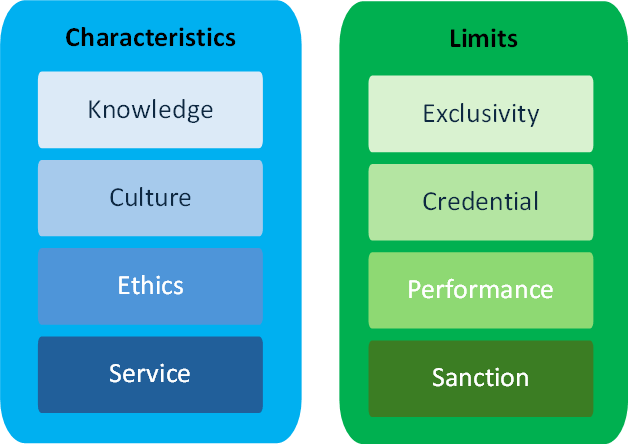
Figure 1: Defining the academic teaching profession
This professional work academic, and less formulaic. It must involve more than ‘content creation’ and ‘delivering slides’, or ‘marking computer-generated text’. The difference, arguably, is engagement of a trained intellect as part of functional university operations. Traditionally, this refers to ‘scholarship’. As complex and varied as research, scholarship typically refers to a form of sustained study which generates understanding of, or insights into, a field. This principle seems straightforward. However, following this principle means content must prompt learner curiosity and must shape learner’s proactive application of that content, affirms the inherent agency and energy of individual teachers, and means academic teachers’ work must be structured in ways that enable fruitful scholarship.
Autonomy is integral to professional academic teaching. It is always mediated and conditional. It is rarely (if ever) absolute, unrestricted and universal. Autonomy, and academic autonomy specifically, is not a straightforward matter. The threshold questions are how and what limits are set for autonomy. Professional educators with imaginative and inspiring minds need space to study, tinker and develop. They need room to create, challenge and contribute. They need support to tackle problems, trust to drive work forward, and space to create possible futures. They need capacity to deviate from specified curriculum to help students reach standards. They are idealistic at the same time as their professional practice honors rudiments of effective academic teaching. Clearly, autonomy does not mean working alone – productive teams can have more influence than lone players.
There needs to be a fresh model of sustainable sessional work that is fair and productive for teachers, universities and students. This means roles which are specified to require and reward professional teaching, scholarship, and autonomy. It means arrangements which can be sculptured to address tensions arising from the fluidity between program demand and teacher skill, availability and mode of delivery. Universities in English-speaking countries have hatched and propagated commercial ‘online’ service firms for managing teaching workforces. Obviously, as universities have proven in areas like superannuation and student recruitment, profit or non-profit firms can employ teachers and offer careers and employment continuity. With sufficient reconsideration of academic work roles, these provide flourishing and globally oriented alternatives to fitting emerging including non-sessional work roles into large incumbent institutions.
These ideas are merely a gesture towards the substantive building needed to deliver professional academic teachers for Education Universities. There is lots of existing research in this area, and the ideas posed above are more advocacy than conceptual finery. With waves of retirement hitting higher education, and newly graduated doctorates entering the workforce, it is timely to build out how this agenda can be realized and make the most from the dividends that would result. Clearly a job for a sector, not a single institution or field.
Making purposeful teaching work
Learning infrastructure needs to ‘sweat’ for learners enrolled in an Education University. Teaching materials should be continually deployed rather being used for just a few hours each year. Most ingredients needed to activate learning for more than one per cent of the time already exist. We sample four parts of the teaching machinery required to bring such active education to life.
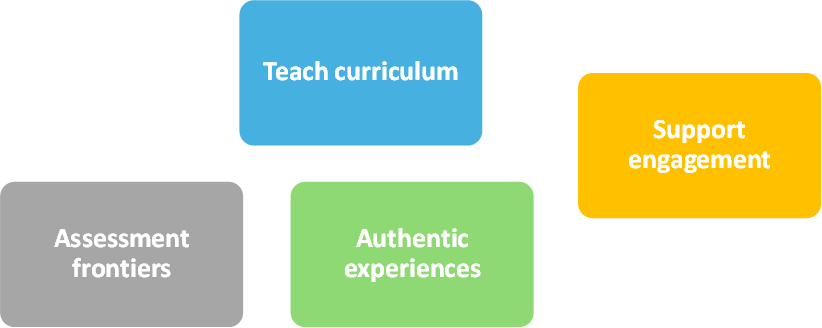
Figure 2: Creating productive curriculum
An Education University would only teach curriculum students need to know. Logically, this means ‘assessment-led learning’ – that people need to be assessed before they are taught to clarify prior knowledge, learning styles, and expectations. Forcing people to plod uniformly through content they already know well is usually cover for teacher-directed curriculum and grab for revenue rather than human capital development. We know from centuries of education research that people are most inspired when teaching is pitched at the pointy tips of firing neurons. Learning platforms readily enable clustering of curriculum in learner-specific chunks. Advancing progress on assessment-led learning must be accelerated to ensure people learn all and only what they need to know and do.
Transforming curriculum lies at the heart of Education Universities. Traditionally, academics generated curriculum, then reviewed and approved learning materials, then provided ongoing oversight and access to expertise. It is now common for teams of learning designers, digital developers, and academics to create curriculum. These innovations have yielded efficiency and quality improvements. Yet they can distance, even alienate, academic teachers from learning resources. The resources themselves become digitally atrophied and can stale. The risk is that quality standards get set in administrative rather than intellectual terms. Updating becomes a matter of corporate scheduling, rather than a labor of invested intellectual passion. Education universities must articulate steps to balance intellectual with administrative demands, to ensure curriculum has life, relevance, purpose, outcomes.
As the growth of contemporary artificial intelligence has revealed, the best higher education involves real people learning together in real places. Distance education helps scale, hybrid education is ubiquitous, and simulations make neurons fire. A dedicated Education University would encompass all that, and just as surely support feasible, authentic, real-world, in-place learning. Psychoanalysts have shown humans learn best when they are ego-invested in imagination-inducing projects where they can construct ideas and artefacts. Engineers call this tinkering. Teachers call it play. B-School deans deploy syndicates. Might all programs in an Education University engage with project-based work-integrated learning and internships?
Deploying needed, lively and authentic curriculum will only work if people engage. After much tussling, the term ‘student engagement’ is now usefully implanted in the higher education lexicon. Yet it is only just yielding full constructive potential. As experienced designers have shown, this means building services around learners as they construct expertise through stimulating curriculum content. This approach swerves away from concentrating on buildings, staffing allocations, research interests, and regulators. We can and should shift from a helicopter to a footpath view of learning. Rather than tabulations and mappings that assure content, classrooms and compliance, we need point of view goggles that simulate what learners encounter, bump into, are invited to do. As designers, architects and gamers have shown, learning encounters like this ensure experiences are engaging and make practical sense.
Building Education Universities
Australia provides a useful test bed for sketching key design features of an Education University. There is value thinking within constraints of a single and rather distinct system. There is also an imperative to jump on planes, video calls and the internet. We have to look around. Education systems become stale and fragile rather than educationally adventurous when they are coaxed into comfort by tempting delicacies like tax free cashflows, sharp algorithms, single-country mindsets, and designer lighting. Fast growing higher education systems are leaping ahead and devising Education Universities, in particular innovation economies which have accelerated development of higher education systems in the new millennium. The world would benefit from a club that connects these emerging powerhouses.
Clearly, Education Universities will sit in matured education systems. They will give rise to novel education economies. This is more than an important spillover – it is critical market transformation. Many of today’s striving universities have fallen into a prestige trap and maneuvered to sell premium, priced-up, bundled products to elite student segments. This misaligns with surging population-wide and career-long demand for more individualized and atomized forms of learning. This misalignment breeds discontent and waste. To align provision with future demand, universities need to steer away from offering premium products to affluent segments, and offering bundled qualifications to individual students. It is necessary to shift into less affluent market spaces and offer specific competencies that match and augment specific talent needs.
It is almost certain that Education Universities will be post-institutional in nature, formed via partnerships. Few institutions do it alone anymore, even (and especially) the biggest. All manner of service firms have furrowed into the sweet meat of higher education. Now it is imperative that educators are in charge of designing and striking joint venture deals that serve students. Key thresholds must be satisfied to ensure service providers create and raise value for education. Power dynamics vary across institutions and it is imperative that service providers focus on education rather than the any other way around.
Time to design Education Universities. Today’s universities evolved from different contexts and activities, and often by accident or random circumstance. Different services, arrangements and situations would better fit current and emerging circumstances. Political, collegial and commercial dynamics sway higher education, but imagination remains the key. Education Universities will require legal, regulatory, industrial, community engagement, and educational reform. Rarely before has higher education in many developed countries experienced so much policy volatility, political disinterest, and undermining deficits. Coders, consultants, lawyers, agents, builders, rankers, and bankers don’t have the skills or nous to build Education Universities. Nor, likely, do they want to. Now is the time for educators to lead.
Further reading for inquiring minds
Coates, H. (2020). Higher Education Design: Big deal partnerships, technologies and capabilities. Singapore: Palgrave Macmillan.
Coates, H., Liu, L. Zhang, J., Jiang, F., Zhang, D. & Godinho, S. (2021). Next-generation assessment spurs smarter learning. Journal of Supranational Policies of Education, 13, 88-103.
Coates, H., Zhang, Y., Li, M. & Zhong, Z. (2022). A Turning Point for Chinese Higher Education: The development of hybrid education. London: Routledge.
Croucher, G. & Waghorne, J. Australian Universities: A History of Common Cause, Sydney: UNSW Publishing, 2020. 278 pages.
Penprase, B.E. & Pickus, N. (2023). The New Global Universities: Reinventing Education in the 21st Century. Princeton: Princeton University Press.
Woelert, P. & Croucher, G. “Polarisation and casualisation: the changing academic workforce at Australian universities.” Research Handbook on Academic Labour Markets. Edward Elgar Publishing, 2024. 280-289.
© HEFL 2024


